
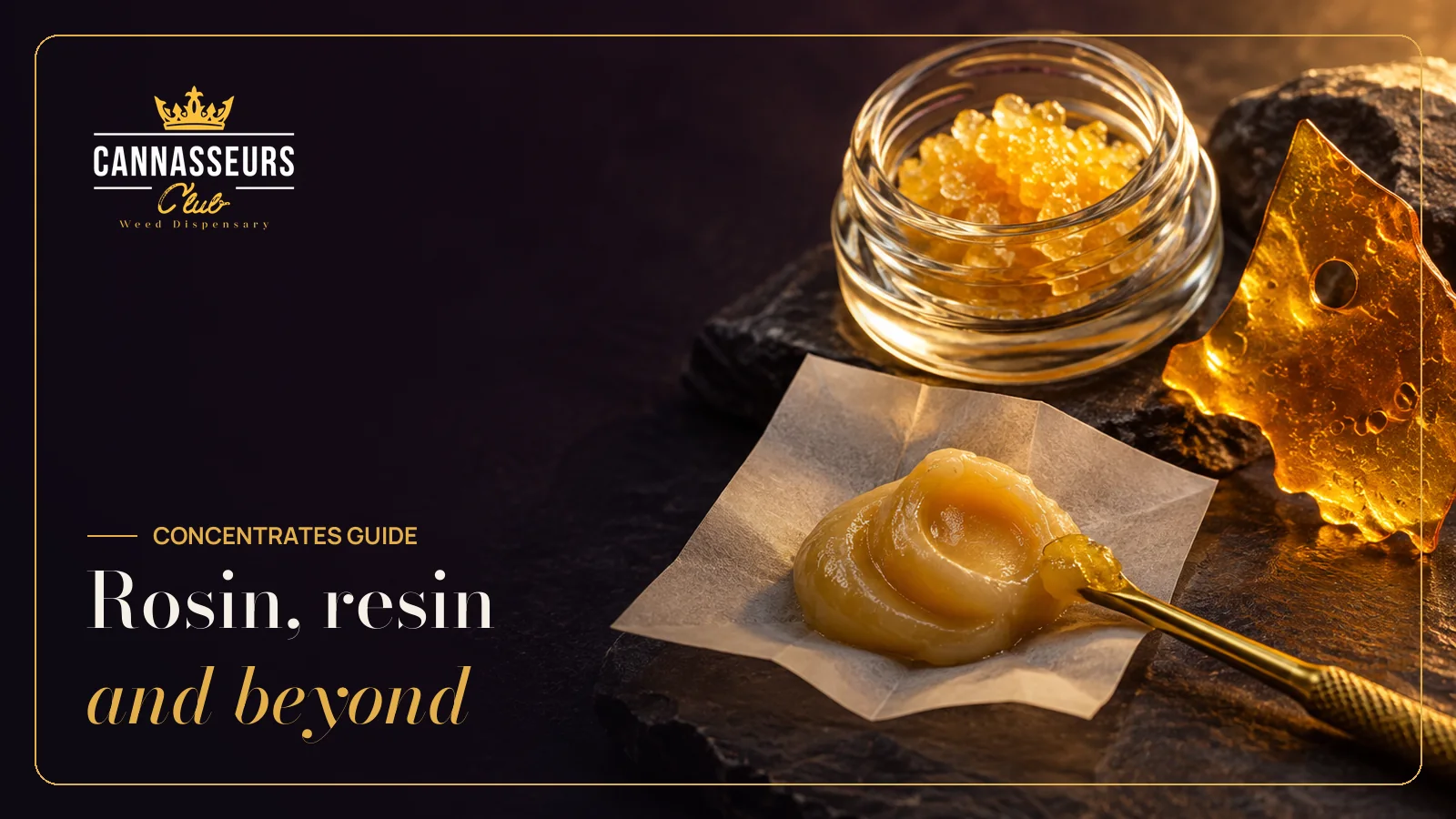
Cannabis concentrates are the plant's resin collected on its own, either with heat and pressure (solventless rosin) or with a solvent that is later purged (live resin, cured resin and distillate). The texture, from glassy shatter to whipped badder, mostly tells you how the extract was finished, and nearly all of them are far stronger than flower, so start with a dab about the size of a grain of rice.
Solventless vs solvent-based: the big split
Every concentrate has the same goal: collect the trichomes, the tiny resin glands that hold most of the plant's cannabinoids and terpenes, and leave the leaf and stem behind. There are two ways to get there, and the label on any jar at our concentrates counter in North Hollywood tells you which camp it belongs to.
Solventless: flower rosin, hash rosin and live rosin
Solventless extracts use nothing but heat, pressure, cold water and filtering.
- Flower rosin is made by pressing dried flower between heated plates until the oil squeezes out. It's the simplest method, and the flavor follows the strain that went into the press.
- Hash rosin adds a step. Plant material is washed in ice water so the trichome heads snap off, the water is filtered through fine mesh bags, and the collected hash is dried and then pressed. Because only resin heads go into the press, hash rosin tends to taste cleaner than flower rosin.
- Live rosin is hash rosin made from plants frozen right after harvest instead of dried. Concentrate fans seek it out for its bright, fresh-plant flavor.
Solvent-based: live resin, cured resin and distillate
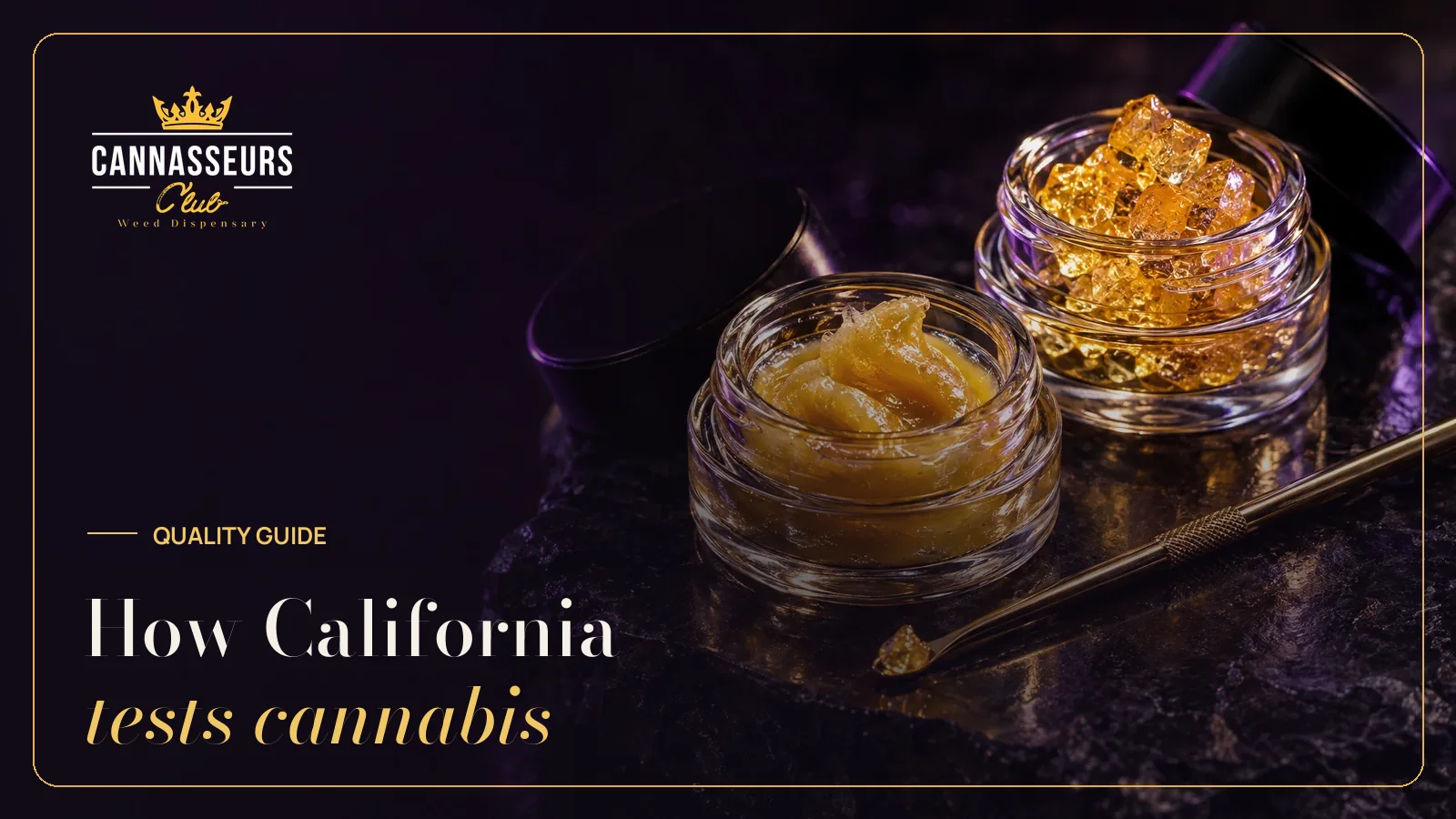
Solvent-based extracts run plant material through a solvent, usually a hydrocarbon such as butane or propane, which dissolves the resin. The solvent is then purged, and every licensed batch is screened for residual solvents before it can be sold. Our guide to how cannabis is lab tested in California explains that screen and the rest of the panel.
- Live resin starts with fresh-frozen plants, so it keeps more of the living plant's aroma.
- Cured resin starts with dried and cured flower, and it tastes more like the bud you'd smell in a jar.
- Distillate is refined further until it is mostly a single cannabinoid with very little flavor. It's the base of many vape cartridges and edibles, and it's also sold on its own in syringes.
| Type | How it is made | Typical texture | Who it suits |
|---|---|---|---|
| Flower rosin | Dried flower pressed with heat | Sappy oil or soft badder | People who want solventless and like a strain's full character |
| Hash rosin | Ice water hash, dried, then pressed | Badder, jam or sauce | Flavor chasers who want solventless |
| Live rosin | Hash from fresh-frozen plants, pressed | Badder, jam or sauce | Solventless fans who want a fresh-plant taste |
| Live resin | Fresh-frozen plants, hydrocarbon solvent, purged | Sauce, sugar, badder or diamonds | People who like loud terpene flavor and lots of texture options |
| Cured resin | Dried flower, hydrocarbon solvent, purged | Shatter, wax or budder | People who like the taste of jarred flower |
| Distillate | Extract refined to isolate cannabinoids | Thick, clear oil | People who want consistent potency and little flavor |
Badder, wax, shatter and friends: what the textures mean
Texture comes from how an extract is finished: whipped, left to crystallize, purged slowly or left alone. On its own, it doesn't tell you whether a concentrate is strong or weak. Here's how to read the names on the jar.
- Badder or budder: whipped until it looks like cake batter or soft butter. Easy to scoop with a dab tool.
- Wax: opaque and soft, somewhere between crumbly and pliable.
- Shatter: a thin, glassy, amber sheet that snaps cleanly when it's cool.
- Sugar: grainy and a little wet, like brown sugar.
- Sauce: a runny, terpene-heavy liquid, often with crystals floating in it.
- Diamonds: crystals of THCA that grow out of the extract, usually sold sitting in sauce. They're very potent and light on flavor until you add a little sauce back.
How people consume concentrates
Concentrates are vaporized rather than burned, and there are four common ways to do it.
- Dab rig: a small water pipe with a quartz banger (or nail) that you heat with a handheld torch. Let it cool for a bit before dropping in the concentrate. A lower temperature tastes better and feels less harsh, and a carb cap helps the vapor form at that lower heat.
- E-rig: a battery-powered rig with preset temperatures. No torch, more consistent heat, and a gentler learning curve.
- Nectar collector: a straw-shaped tool with a heated tip that you touch to the concentrate. Handy for small amounts.
- Topping a bowl: a small pinch sprinkled over flower in a bowl. It's the easiest way to try a concentrate without new gear, though the bowl burns faster.
Keep torches, rigs and jars out of reach of kids, and never dab in a vehicle. California law bans cannabis use for drivers and passengers alike.
Start small: a rice-grain amount
Many concentrates test at several times the THC percentage of flower, so one dab can feel very different from a hit off a joint. Start with an amount about the size of a grain of rice, take it slowly, and wait at least 10 to 15 minutes before deciding whether you want more. You can always take a second dab later; you can't take back the first. Everyone responds differently, and that's especially true with concentrates.
Budtender tip: Portion your rice-grain dab onto a small square of parchment before you heat anything. A small amount is much easier to judge on the table than on the end of a dab tool next to a hot banger.
Buying concentrates: limits, labels and lab results
California lets adults 21 and over buy up to 8 grams of concentrated cannabis per day from a licensed retailer, and carry up to 8 grams at a time. Adult-use concentrate packages are capped at 1,000 mg of THC each.
Every jar should carry the California universal cannabis symbol, child-resistant packaging and a batch number. That batch number ties the jar to its certificate of analysis (COA) from a state-licensed lab, covering potency, residual solvents, pesticides, heavy metals and microbial contaminants. Our budtenders can pull up the COA for any jar, and the live menu shows current stock, prices and THC figures. For possession, transport and where you can legally consume, see our California cannabis laws guide.
Storing concentrates: cool, dark and sealed
Heat, light and air are what dull a concentrate. Terpenes evaporate, colors darken and textures change; shatter can turn sugary and sauce can separate. To slow that down:
- Keep the lid tight, and open the jar only when you need to.
- Store jars somewhere cool and dark, away from windows, the stove and hot cars.
- If you keep live rosin or sauce in the fridge, let the sealed jar warm back to room temperature before opening it, so moisture doesn't condense inside.
- Keep everything in child-resistant packaging, out of reach of kids and pets.
Concentrate brands we often carry
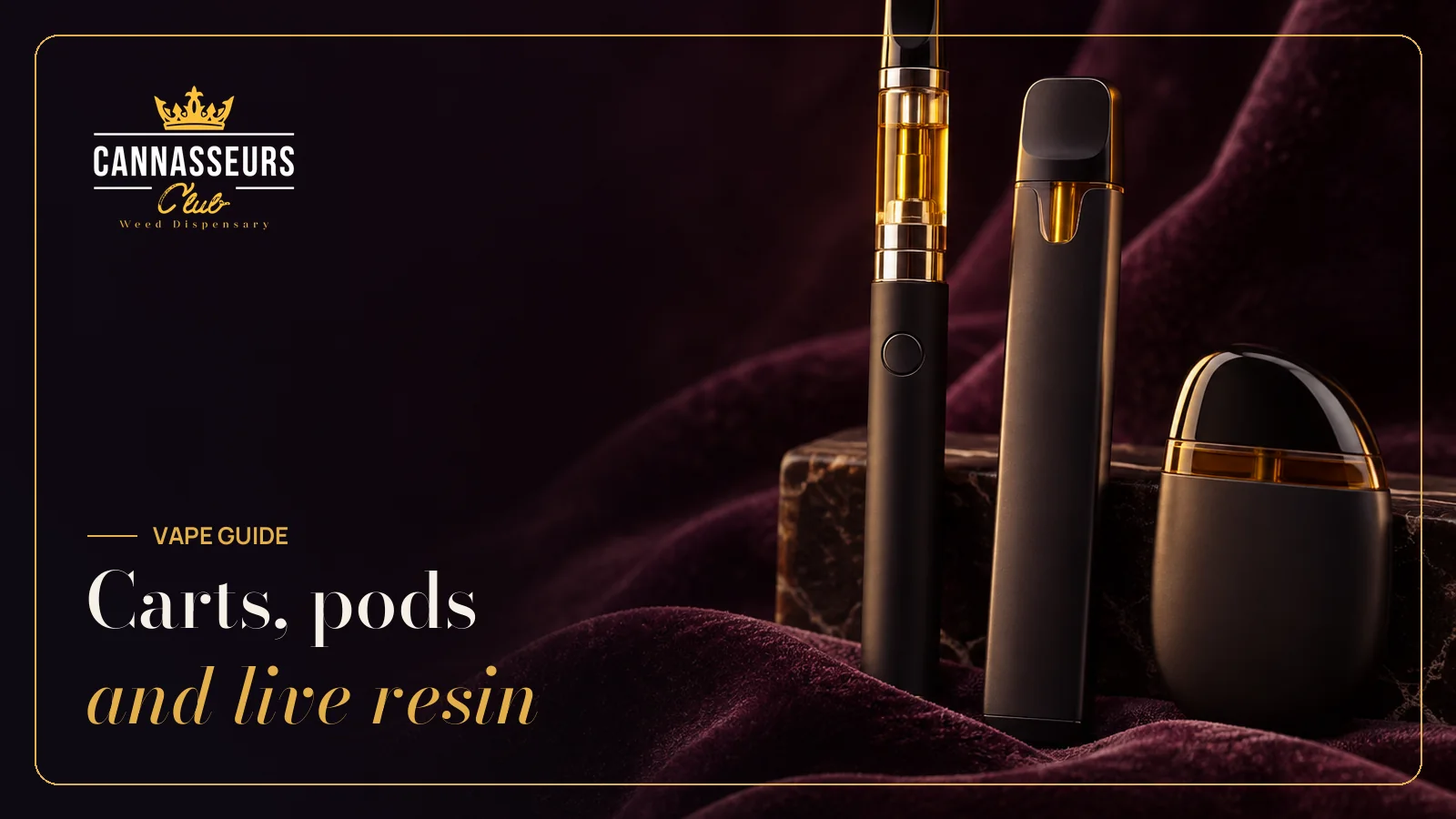
Stock changes daily, but brands we often carry include 710 Labs, Raw Garden, Tutti, Jetty Extracts and BISCOTTI. The menu is the final word on which styles and textures are in today. If you're deciding between two jars, ask the budtender to show you both; seeing badder next to sauce makes this guide click fast. Prefer to vape these extracts instead of dabbing them? Our vape guide explains how live resin and live rosin show up in cartridges.
Frequently asked questions
Is solventless cleaner than solvent-based?
Both have to pass the same state lab testing before they reach a licensed shelf, and anything made with a solvent is also screened for residual solvents. Solventless is a different process rather than a pass or fail grade, so the choice usually comes down to flavor, texture and personal preference.
What do THCA and total THC mean on a concentrate label?
THCA is the form of THC found in the raw plant, and heat from a dab or a bowl converts it into THC. Labels list the cannabinoid amounts so you can compare jars; diamonds, for example, are mostly THCA.
Do I need a torch to dab?
No. An e-rig heats with a battery and preset temperatures, and a nectar collector or a topped bowl needs very little gear. Ask at the counter about the accessories in stock.
Can I travel with concentrates?
Within California, adults 21 and over can carry up to 8 grams, kept sealed or in the trunk while driving. Cannabis can't legally cross state lines, and federal law applies at airport security, so don't fly with it.
What's the difference between a dab and a vape cart?
A cart holds pre-filled oil, often distillate or live resin, made to run on a battery at a steady, lower heat. A dab vaporizes a solid or semi-solid concentrate on a hot surface all at once, which usually means a bigger hit, so start smaller. Browse vape carts and pods if you'd rather skip the rig.
Visit Cannasseurs Club
Address11307 Vanowen St, North Hollywood, CA 91605
On Vanowen St, just east of Tujunga Ave
HoursOpen daily, 10 AM to 10 PM
Call(818) 358-2770
Plan your tripGet directions · Live menu
Sources: California Department of Cannabis Control · DCC: consumer information
Keep reading
 Cannabis Vape Guide: Cartridges, All-in-Ones, Distillate and Live Resin
 How Cannabis Is Tested in California (and How to Read a COA)
 Five Cannabis Products Worth Trying at Cannasseurs Club
For adults 21 and over, or 18 and over with a valid physician's recommendation. This guide is general information, not medical or legal advice. Cannasseurs Club, California license C12-0000361-LIC.