
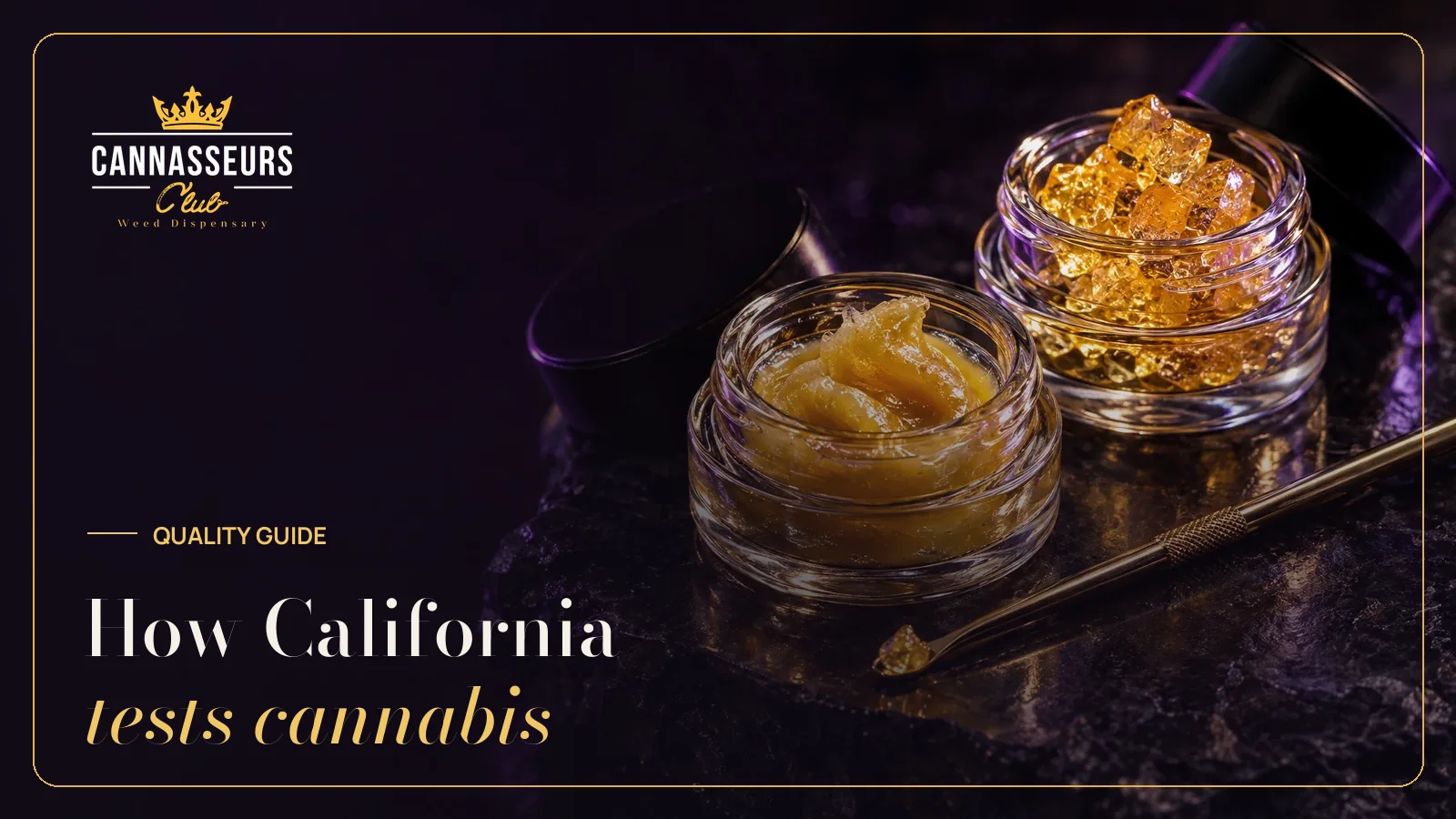
Every batch of cannabis sold in a licensed California shop has to pass a state-licensed lab first, with screens for potency, pesticides, solvents, microbes, heavy metals and more. The results live in a certificate of analysis (COA) tied to the batch number on the package. Once you know where to look, a COA takes about a minute to read.
What every batch has to pass
Under Department of Cannabis Control (DCC) rules, cannabis can't go on sale in a licensed shop until its batch passes testing at a state-licensed lab. The results are written up in a certificate of analysis, or COA, tied to the batch number on the package. Here's what the testing covers.
| Test panel | What it checks | Why it matters to you |
|---|---|---|
| Cannabinoid potency | THC and CBD levels | The numbers on the label come from this result |
| Terpenes (when labeled) | The aroma compounds a label lists | Terpene information on a package is backed by a lab measurement |
| Residual solvents and processing chemicals | What's left over from extraction and processing | Shows extracts such as vapes and concentrates came in within state limits |
| Residual pesticides | Dozens of pesticides, with the most hazardous allowed at zero detectable level | Shows the crop met California's pesticide rules |
| Microbial impurities | Pathogenic Aspergillus, E. coli and Salmonella | Screens out batches with microbes the state does not allow |
| Mycotoxins | Toxins that some molds can produce | Adds a second check alongside the microbial screen |
| Heavy metals | Cadmium, lead, arsenic and mercury | Screens for metals the state limits |
| Foreign material | Debris or anything else that doesn't belong in the product | Confirms nothing got into the batch that shouldn't be there |
| Moisture content and water activity | How much water is left in dried flower | Shows the flower was dried to within state limits before packaging |
| Homogeneity (edibles) | Whether THC is spread evenly through the product | Each serving should match what the label says |
A batch has to pass before it can be sold at retail. That's the core difference between a licensed product and something from an unlicensed seller, and vape cartridges are a clear example. The 2019 outbreak of lung injuries linked to vaping (EVALI) was tied mainly to vitamin E acetate in illicit THC cartridges, according to the CDC. Every cart on our vape shelf comes through the licensed, tested system, which is the safer route.
The plus or minus 10 percent label rule
The THC number printed on a package isn't a guess or a marketing figure. California requires labeled THC to be within plus or minus 10 percent of the lab result. For a 100 mg edible package, that window runs from roughly 90 to 110 mg.
That tolerance explains a couple of things you might notice at the counter. Two jars of the same strain from different harvests can show different THC numbers, because each batch is grown and tested on its own. And a small gap between a label and a COA isn't a problem as long as it sits inside that 10 percent band. A label far outside it, or a product with no batch number at all, is worth asking about.
How to read a certificate of analysis
COAs vary in layout from lab to lab, but they carry the same core information. Work through one in this order.
1. Match the batch number
The batch number on the COA should match the batch number on your package exactly. A COA for a different batch tells you nothing about the jar in your hand, even if the strain name is the same.
2. Check the lab name and license
The COA should name the testing lab and show its state license number. That's how you know the results came from a lab licensed to do this work in California.
3. Look at the test date
The date tells you when the sample was tested. It's a useful clue to how recently the batch was produced, which matters most with flower, since aroma fades over time.
4. Read the pass/fail panels
Most COAs give a clear pass or fail for each safety panel: pesticides, solvents, microbials, mycotoxins, heavy metals, foreign material, and moisture for flower. On a product that's legally on the shelf, you should see passes across the board.
5. Check the terpene results
If terpenes are listed on the label, the COA shows the lab's measurements, usually as individual terpenes plus a total. Names like myrcene, limonene, caryophyllene and pinene come up often. The total gives you a rough sense of how aromatic the product is, and the top two or three often line up with what you smell when the jar opens.
Reading the cannabinoid table: THCa, delta-9 and total THC
The cannabinoid section is where most people get confused, because raw flower contains very little delta-9 THC. Most of it is THCa, the acid form the plant produces. Heat from a flame or a vape converts THCa into delta-9 THC, and the molecule loses a little weight in the process.
That's why total THC is commonly calculated as THCa x 0.877 + delta-9 THC. The 0.877 factor accounts for the weight lost in the conversion. Here's an example with round, illustrative numbers:
- THCa: 25%
- Delta-9 THC: 1%
- Total THC: (25 x 0.877) + 1 = about 22.9%
So a flower listing 25% THCa and one listing 22.9% total THC can describe exactly the same batch. When you compare products, compare total THC to total THC. The same table usually lists CBD and minor cannabinoids such as CBG, which you can line up the same way.
Why a higher THC number isn't automatically better
It's tempting to shop by the biggest number on the shelf. THC percentage is one data point, though, not a quality score. Plenty of things that shape your experience don't show up in the potency figure at all:
- Aroma and terpenes. Two jars with similar THC can smell and taste completely different.
- Freshness and handling. Flower that was dried slowly and stored well tends to smoke smoother and hold its aroma longer.
- Your own tolerance. Everyone responds differently. A lower-THC option is often an easier place to start, especially if you're new or coming back after a break.
Start low and go slow, whatever the label says. Our guide to choosing cannabis flower covers how to judge a jar beyond the THC number.
How Cannasseurs house flower goes through testing
Cannasseurs Club grows its own house flower in a licensed indoor hydroponic facility in Southern California, then dries it slowly and brings it to the counter without a distributor in between. Being the grower doesn't change the rules. Every batch is tested by a state-licensed lab for potency, pesticides, microbials and heavy metals, and only batches that pass are jarred with a batch number.
Passing those tests starts in the garden. The grow uses integrated pest management planned to pass California's pesticide screens, and the whole run from clone to jar takes roughly four to five months. You can follow each step on our cultivation process page, or see the strains currently in rotation in our house flower lineup. The same garden supplies Cannasseurs house pre-rolls and vape cartridges.
How to ask for lab results in store
You don't need to be a chemist to use a COA, and there's no need to be shy about asking for one. At our North Hollywood dispensary, budtenders can pull up the certificate of analysis for products on the shelf. A few habits make the conversation quick:
- Point to the specific jar or package, so the COA you see matches its batch.
- Ask for total THC, not just THCa, if you're comparing flower.
- Ask which terpenes came out on top if aroma matters to you.
- For edibles, check THC per serving and per package.
Budtender tip: Hang on to the package, or jot down its batch number. If you ever want to look back at how a product tested, that number is what connects it to the right COA.
Frequently asked questions
Does every product in a licensed California dispensary have a COA?
Yes. Every batch has to pass a state-licensed lab before retail sale, and each batch has a certificate of analysis tied to the batch number printed on the package.
Can a batch that failed testing still be sold?
No. Only batches that pass the required state testing can be sold at retail in California, which is one of the main reasons to buy from a licensed shop.
Are terpenes always tested?
Terpenes are tested when they're listed on the label. If a package makes no terpene claims, its COA may not include terpene results.
Is house-grown flower tested the same way as other brands?
Yes. Cannasseurs house flower is tested by a state-licensed lab like any other batch, and only passing batches are jarred. The cultivation process page shows how it's grown.
Can I check THC numbers before I visit?
Yes. The live menu shows current stock, prices and THC figures. Ask to see the COA in store for the exact batch you're buying.
Visit Cannasseurs Club
Address11307 Vanowen St, North Hollywood, CA 91605
On Vanowen St, just east of Tujunga Ave
HoursOpen daily, 10 AM to 10 PM
Call(818) 358-2770
Plan your tripGet directions · Live menu
Sources: California Department of Cannabis Control · DCC: Information for consumers · CDC: Lung injury associated with vaping (EVALI)
Keep reading
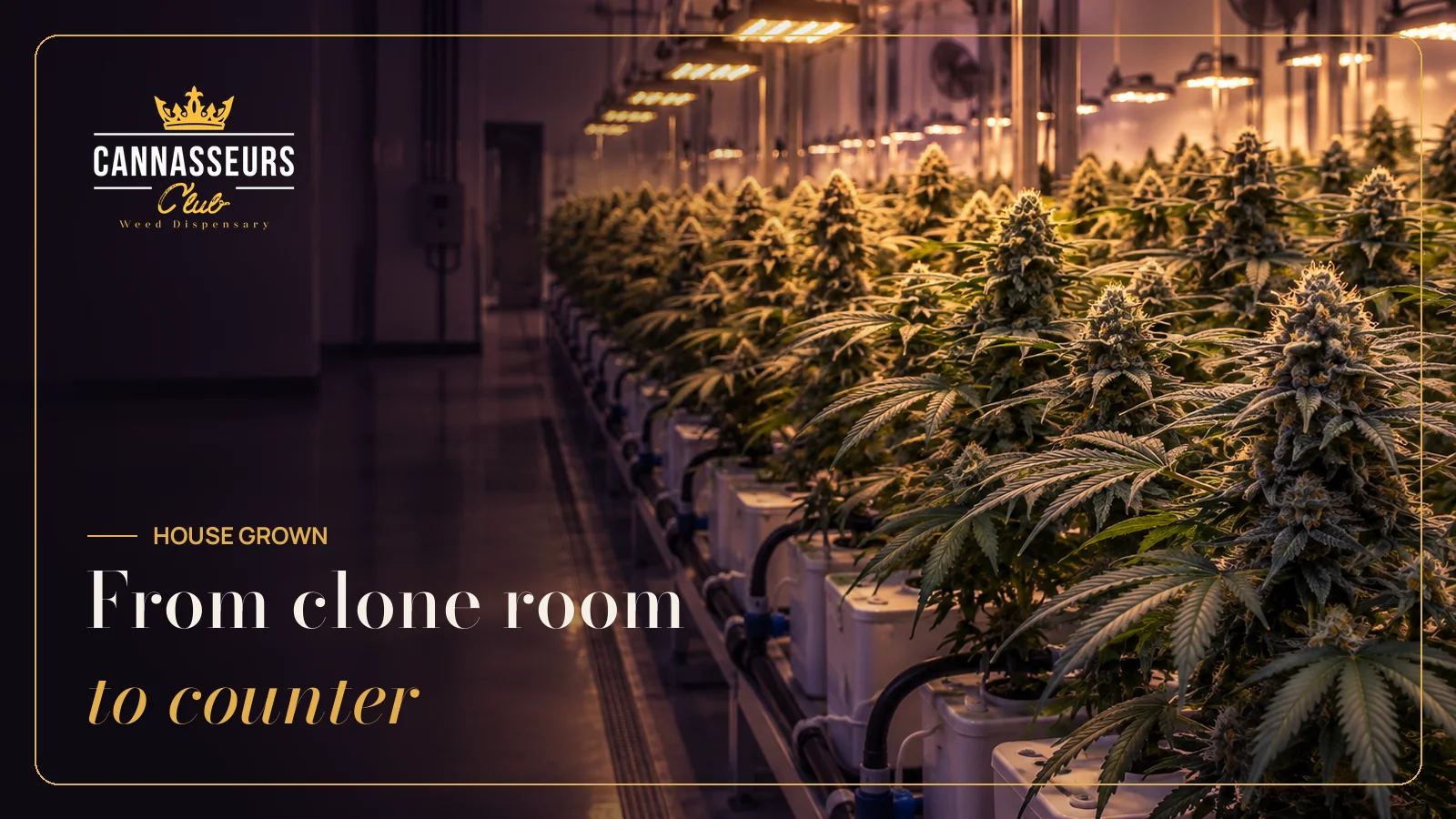 Inside a Vertically Integrated Cannabis Operation
 How We Choose What Goes on Our Shelves
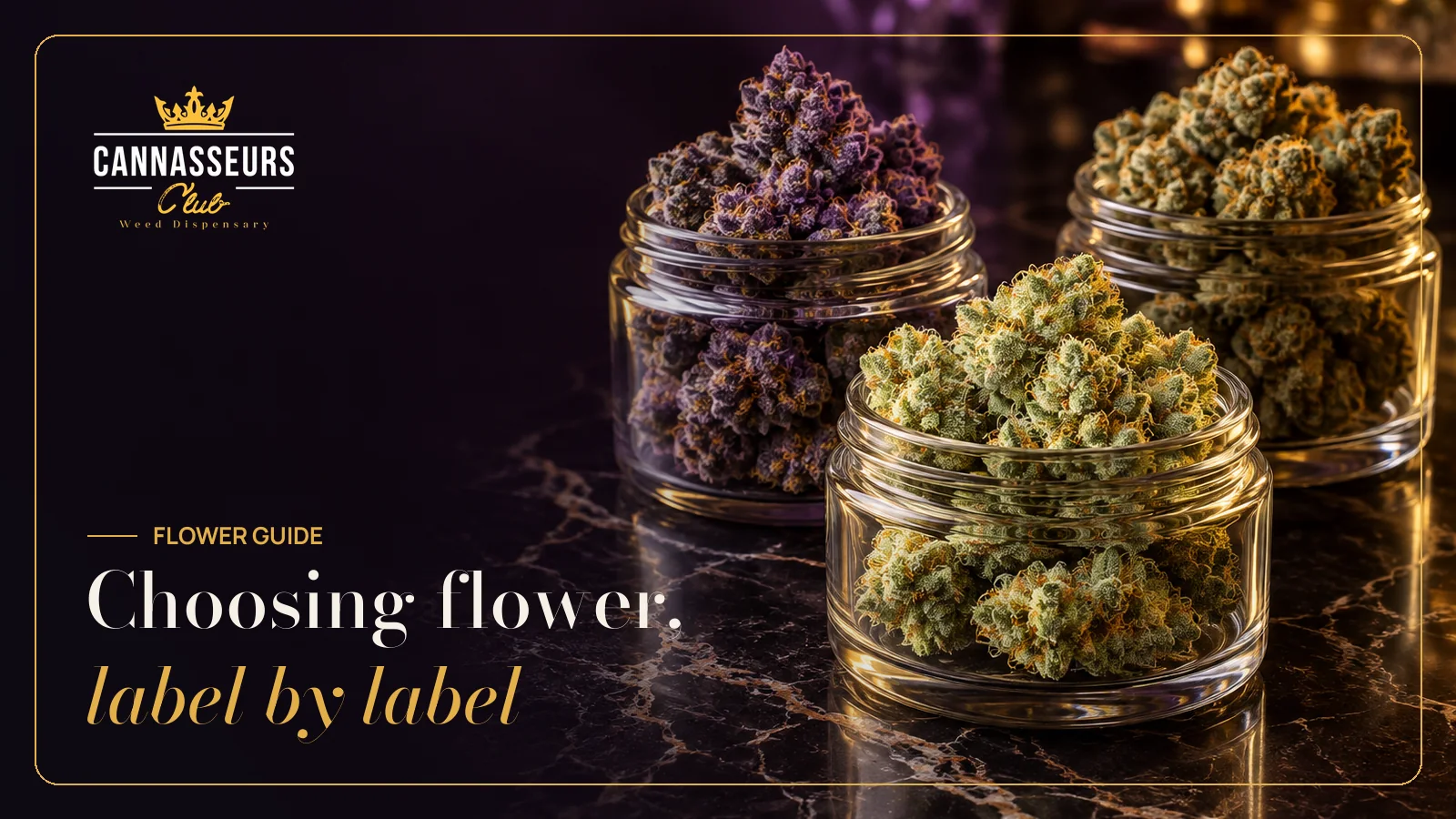 How to Choose Cannabis Flower: Indica, Sativa and Hybrid Explained
For adults 21 and over, or 18 and over with a valid physician's recommendation. This guide is general information, not medical or legal advice. Cannasseurs Club, California license C12-0000361-LIC.